


Horn has been used in button-making since the end of the 19th Century when a consignment of cattle hooves sent to James Grove & Sons Ltd in Halesowen also contained water buffalo horns. While buttons pressed from hooves had been made for many years, horn was unknown in the trade. Indeed, it is said that James Gove & Sons was one of the very first to make horn buttons both in the UK and around the world.
Soon their unique properties and colouration became better known and understood and through the introduction of new processes, the beauty of natural horn was slowly unveiled. Each button was unique in appearance, adding to their collective visual appeal and horn was quickly recognised as a luxury material, adopted by the world’s finest tailors and fashion houses as the material ne plus ultra.
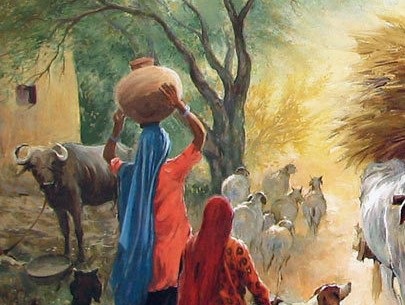
Real horn (typically from either water buffalo or ox) is a by-product of the farming industry, particularly in India and livestock is not reared specifically for their horn. Moreover, the cattle are raised by numerous small, subsistence farmers and the money they receive for their horn is a vital and additional source of income. Without it, many poor rural farmers would simply abandon their vocation.
Horn, itself, is made from keratin which is the same substance as human hair and nails. And as keratin is a type of fibrous protein, horn is fully biodegradable. Horns used in button-making envelop a piece of solid bone which are separated to reveal a hollow piece of horn which tapers to a solid tip. The ‘tips’ are removed and can either be used as toggles or round button ‘blanks’. The hollow parts are pressed flat from which blanks of various diameters are extracted. This type of horn is known as ‘plate’ horn.
Given the structure of the grain (imagine thousands of hairs all stuck together) which runs along the length of the horn, the appearance of the blanks and finished buttons varies markedly according to its type. As a result, the natural colour variation is extensive and each button is unique in its appearance.
Please note that, as a natural material, each horn button will be unique. They are, however, sorted and divided into types to minimise variations, but differences within and between batches are considered quite normal